Emotional Regulation & Self-Compassion
Finding steady ground when betrayal shakes your world.
When betrayal hits, your whole system feels like it’s in free fall. You might feel like you’ve lost yourself—unable to think clearly, control your emotions, or feel safe in your own skin. That’s not a personal failure. It’s your body doing its best to protect you from overwhelming pain.
This page is a space to understand what’s happening inside you, and to practice calming your nervous system so you can begin to feel grounded again. Through education, reflection, and embodied tools, you’ll learn how to name your emotions, regulate your body, and self-soothe without judgment or shame.
Understanding What’s Happening Inside
When you discover betrayal, your nervous system interprets it as a threat to survival—because relational safety is survival. Humans are wired for connection. When that bond is violated, your body reacts the same way it would if you were in physical danger.
You might notice:
Racing thoughts or heart rate
Shallow breathing
Tight chest or stomach pain
Feeling frozen, numb, or detached
Trouble sleeping or concentrating
Intense emotional swings—anger, grief, confusion, despair
These are not signs you’re “crazy.” They’re signs your body is trying to keep you alive.
Trauma isn’t just what happened—it’s what happens inside you as a result of what happened. Understanding this helps you shift from self-blame to self-compassion.
Naming and Validating Your Emotions
After betrayal, emotions often feel chaotic. You may feel rage one moment and guilt the next, hope in the morning and despair by night. It’s disorienting—but naming what you feel brings coherence to the chaos.
Here’s why that matters:
Naming emotions lowers intensity. When you say, “I feel fear,” your brain moves the experience from the limbic system (reactive) to the prefrontal cortex (regulated).
Validation creates safety. When you tell yourself, “It makes sense I feel this way,” you build trust with your own nervous system.
Try phrases like:
“This is grief. And it makes sense I’m grieving.”
“This is anger. And anger is what shows up when something sacred has been violated.”
“This is fear. And I can remind myself I’m safe enough right now.”
When you can name without judgment, you stop fighting your emotions—and begin to heal with them.
The Window of Tolerance: Your Nervous System’s Balance Zone
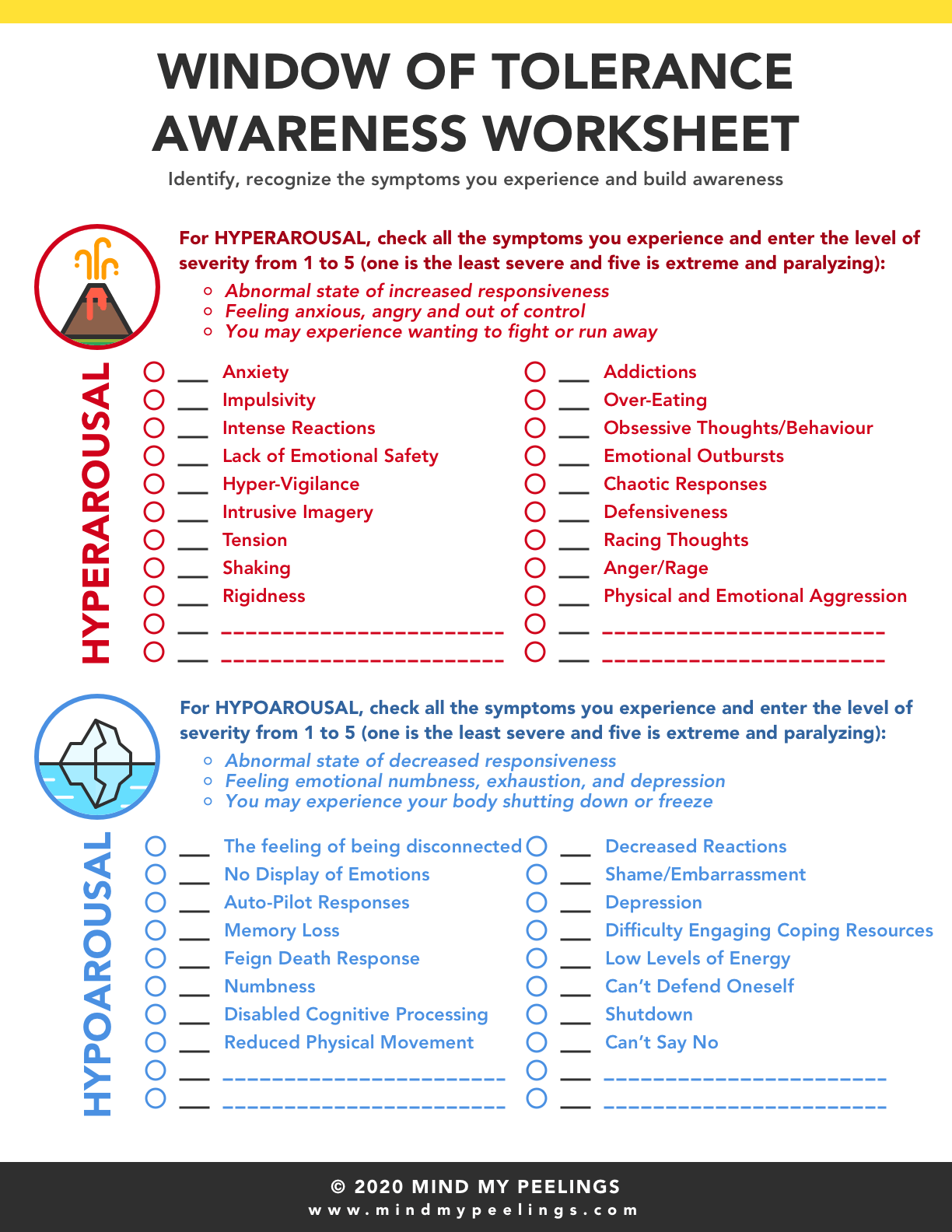
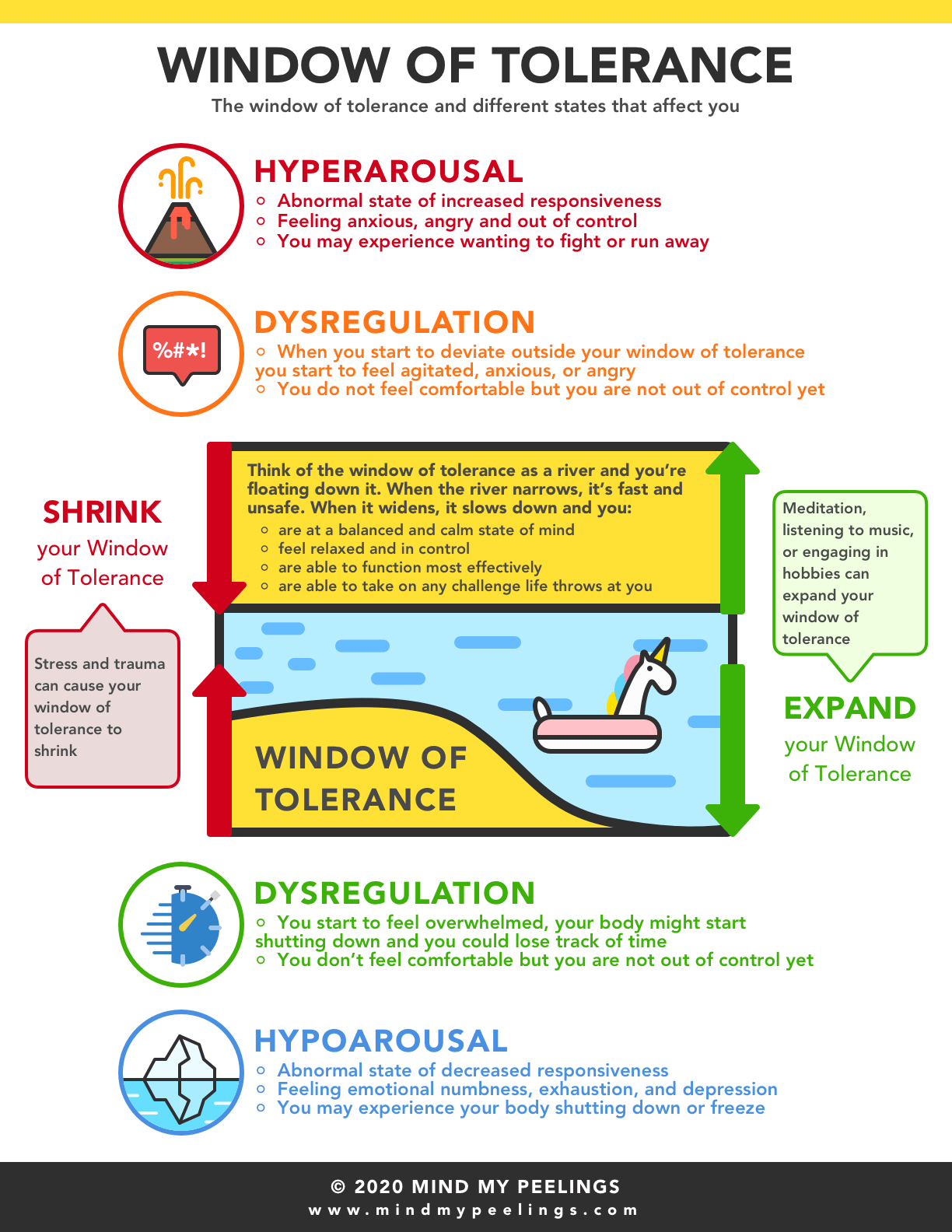
Coined by Dr. Dan Siegel, the Window of Tolerance describes the range in which your nervous system can function optimally.
When you’re inside the window, you can think clearly, feel emotions, and respond flexibly.
When you’re above the window, you’re in hyperarousal—fight, flight, anxiety, rage, panic.
When you’re below the window, you’re in hypoarousal—shutdown, numbness, exhaustion, depression.
After betrayal, your window often narrows dramatically. Small triggers (a text, memory, or silence) can flood your system. Expanding your window is not about never getting triggered—it’s about recovering faster and more gently when you do.
Every moment you practice coming back to calm—no matter how small—is a victory for your healing nervous system.
Distress Tolerance: Riding the Wave, Not Drowning in It
Distress tolerance means building the capacity to stay present in pain without acting impulsively or shutting down. This doesn’t mean ignoring or minimizing what hurts—it means learning how to feel safely.
Here are a few evidence-based tools you can begin today:
Grounding:
Name five things you see, four things you feel, three things you hear, two things you smell, and one thing you taste.
→ Brings the mind back to the present moment.Temperature Change:
Hold an ice cube, run your hands under cold water, or step outside for a few deep breaths.
→ Shifts your body’s physiological state and interrupts panic cycles.Movement:
Trauma is stored in the body. Gentle walking, stretching, or rocking helps release activation.
→ Emotion is energy in motion—let it move through.Breathing:
Try box breathing — inhale 4, hold 4, exhale 4, hold 4.
→ This calms the vagus nerve, lowering heart rate and anxiety.
Distress tolerance is like learning to surf: you can’t stop the waves, but you can learn how to ride them with steadiness and grace.
Somatic Regulation: Healing Through the Body
Emotional healing is not just cognitive—it’s somatic. Your body holds memories, sensations, and unprocessed emotions. When words can’t reach the pain, movement, breath, and gentle touch can.
1. Tapping (EFT – Emotional Freedom Technique)
Lightly tap specific acupressure points (like the collarbone, under the eye, or side of the hand) while naming what you feel:
“Even though I feel anxious, I deeply and completely accept myself.”
Tapping helps discharge emotional energy and create a sense of safety.
2. Grounding Touch
Place one hand on your heart and the other on your belly. Feel the rise and fall of your breath.
Say to yourself, “I’m right here. I’m safe enough. I’m not alone.”
3. Breathwork for Regulation
Try the 4-7-8 breath: inhale for 4, hold for 7, exhale for 8.
This activates your parasympathetic (rest-and-digest) nervous system and helps the body relax.
4. Gentle Movement
Yoga poses like child’s pose or legs up the wall can help discharge cortisol and settle the body after emotional flooding.
These somatic tools work best when practiced regularly—not only in moments of distress. Over time, they retrain your nervous system to trust that calm is possible again.
Self-Soothing Without Judgment
Many betrayed partners struggle with self-compassion. You may tell yourself you “should be over it by now,” or feel guilty for breaking down. But judgment only deepens pain.
Self-soothing isn’t self-indulgence—it’s survival.
When you comfort yourself kindly, you’re repairing the rupture inside caused by betrayal.
Try:
Wrapping yourself in a blanket and breathing deeply.
Speaking to yourself the way you would to your child: “You’re doing your best. You’re safe right now.”
Creating rituals of comfort—lighting a candle, taking a warm shower, journaling before bed.
You deserve gentleness. Not because you’ve done everything right, but because you’ve been deeply hurt and are still showing up.
Journal Prompt
What emotions do I avoid most, and what do they need from me?
Instead of trying to fix or silence your feelings, ask what they’re protecting.
Is anger guarding your boundaries?
Is sadness asking to be held?
Is fear warning you not to rush healing?
Write for a few minutes without editing. Let honesty be your medicine.
Faith Reflection
Even when everything feels unsafe, remember this truth: God is not afraid of your emotions. He is steady when you are shaky, compassionate when you are self-critical, and near when you feel abandoned.
When the disciples panicked in the storm, Jesus didn’t scold them for being afraid—He spoke peace over the chaos. That same presence still whispers to your storm today.
“The Lord will fight for you; you need only to be still.” – Exodus 14:14
Encouragement
Healing from betrayal trauma is not about returning to who you were before—it’s about becoming more grounded, more attuned, and more compassionate toward the one within you who has survived the storm.
Each breath you take, each emotion you name, each time you calm your body—you are rebuilding safety from the inside out.
You don’t have to control the storm. You only have to remember that you are not alone in it.